|
《踏歌》
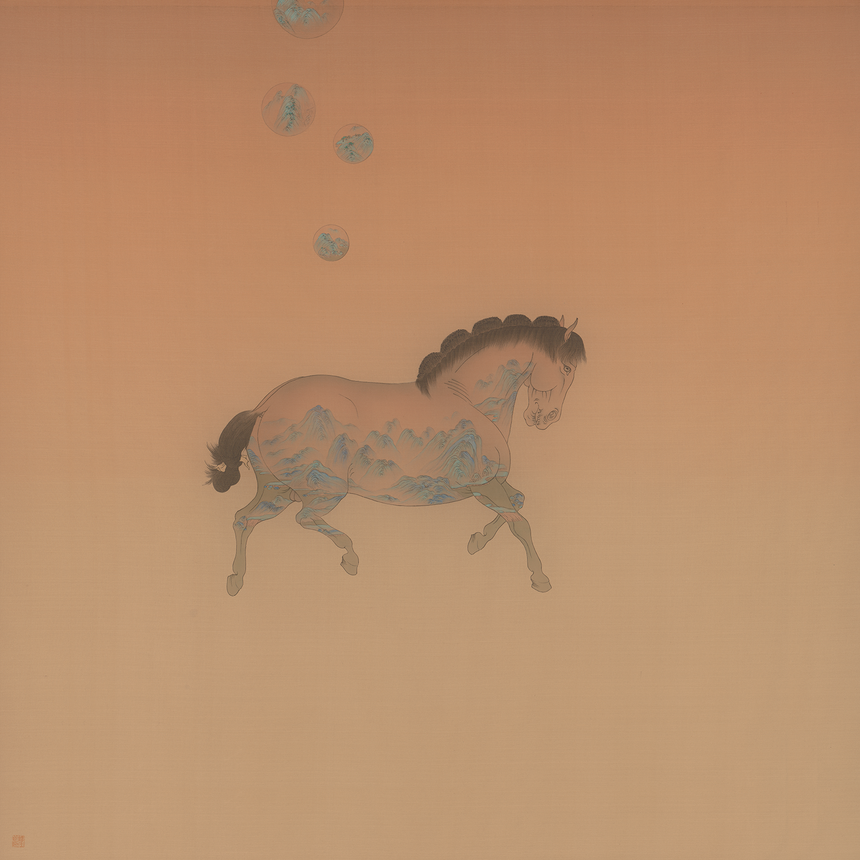
备选 G|《踏歌》Walking Ballad 隋宜航|中国传统绢、天然矿物质颜料|80×80cm|2024 题句:唐・李白《赠汪伦》 中文作品介绍 骏马缓步而行,躯体之内藏入连绵青绿群山,几枚悬浮的圆泡中,盛着微缩山河,轻盈悬于空茫的绢本底色之上。正如李白诗中所写:李白乘舟将欲行,忽闻岸上踏歌声。诗里的踏歌,是送别之时踏地为节拍,随兴而起的歌谣,是人与人之间真挚温热的情谊。 以绢本重彩层层渲染,矿物颜料晕染出清透的青绿。马身承载万里山川,山水藏于躯体,山河与骏马合二为一。空中浮泡里的迷你山水,如同世间细碎而珍贵的相逢与记忆。作品将古典诗意化作超现实的画面,把古老歌谣的浪漫,凝于奔行的骏马之中,在古今之间,留存一份真挚温暖的共鸣。 English Introduction Artist: Sui Yihang Medium: Traditional Chinese Silk, Natural Mineral Pigments
Size: 80×80cm Year: 2024 The steed moves slowly, its body filled with rolling green mountains. Several floating orbs hold miniature landscapes, hanging lightly above the soft silk background. As Li Bai’s poem describes: When Li Bai boarded the boat ready to leave, he heard footsteps and singing from the riverbank. The "Walking Ballad" in the poem refers to rhythmic songs sung at farewell, expressing sincere and warm friendship between people. Painted on silk with layered natural mineral pigments, the artwork creates translucent green-blue tones. The steed carries mountains within its form, merging the horse and landscape into one. Tiny mountains within floating bubbles represent precious encounters and memories. Transforming classical poetry into a surreal visual scene, the painting captures the romance of this ancient folk song on the walking steed, preserving sincere and warm resonance across time. 作品名释义(画册小字) Walking Ballad Ancient Chinese "Tage" means singing while walking, tapping feet to keep rhythm. This work draws inspiration from Li Bai’s famous poem, celebrating sincere friendship. The horse bears mountains within its body, and floating orbs hold miniature landscapes, symbolizing precious encounters worthy of song.
|